SUMMER SHRED STUDY
30 days. Real results. All levels welcome.
This is a no-fluff, do-anywhere 30-day challenge designed to make you stronger, faster, and more energized this summer. Train six days a week, hit 10,000 steps daily, dial in your nutrition, and prove to yourself what you can do. Ready when you are.
What this is (and what it isn't)
This is a 30-day commitment, not a crash diet. The goal is simple: train hard, move every day, fuel like an athlete, and finish the month stronger, leaner, and more energized than you started.
It’s a challenge, not a rulebook.
Scale any workout to match your body, but show up every day. Check in with a physician first if you have health concerns.
Is this the right fit for you?
Summer Shred is built for people who want a real challenge. Scroll the strength workouts below — if the moves look like more than you’re ready for, start with our 10,000 steps a day habit instead. More Reputable Health fitness programs are coming soon.
Open this summer. After that the study closes to new participants until next summer.
Finish the 30 days and earn 100 Heartbeats in the Reputable Health app.
A complete 30-day program, designed and personally tested by our Head of Clinical Research, plus a personalized look at your own activity, sleep, and recovery trends.

Your week at a glance
Pick how many days a week you want to train, then choose your days. We spread the workouts evenly across the week — every off day is still 10,000 steps.
~30 min strength + 10,000 steps.
Steps run through all 7 days, including your rest days. If you are starting well below that, ramp up over the first few days. It is the easiest, highest-value habit in the whole program. (6 training days this week.)
Add it to your calendar
Set your level, pick how often you'll train, then send the 30-day plan straight to the calendar you already use.
This controls every workout (and the cardio guidance) — and the difficulty saved to your downloaded calendar. Default is Beginner.
Pick a cadence — your off days become rest or step-only days, still aiming for 10,000 steps.
Training 6 of 7 days. Off days are rest or step-only days — you still aim for 10,000 steps.
⏰ Enrollment ends this summer— sync before the deadline
Add the 30-day plan to your calendar
Download once, then open the file. Google Calendar, Apple Calendar, and Outlook all import the same workout plan automatically.
Loading…
Pick your calendar to download & set up
Google Calendar0/3
File: summer-shred-2026-10-13-6days.ics
Apple Calendar (iCloud)0/3
File: summer-shred-2026-10-13-6days.ics
Outlook0/3
File: summer-shred-2026-10-13-6days.ics
Any other calendar (.ics)0/2
File: summer-shred-2026-10-13-6days.ics
Every one of the 30 events includes the full workout regimen in its description.
WorkoutsThe workouts, in detail
Strength routines and cardio guidance.
The workouts, in detail
Strength routines and cardio guidance.
The Strength Workouts
Three 30-minute sessions a week, built on a low-weight, higher-rep approach. The focus is good form and steady effort, not heavy lifting. Rest 30–60 seconds between sets. Pick the column that matches you today. It is fine to mix levels across different moves. As a move starts to feel easy, that is your signal to progress: add a couple of reps, a little resistance, or step up to the next column.
Cardio and Daily Movement

LifestyleNutrition, hydration & sleep
The habits that decide whether the workouts stick.
Nutrition, hydration & sleep
The habits that decide whether the workouts stick.
Nutrition: Keep It Simple

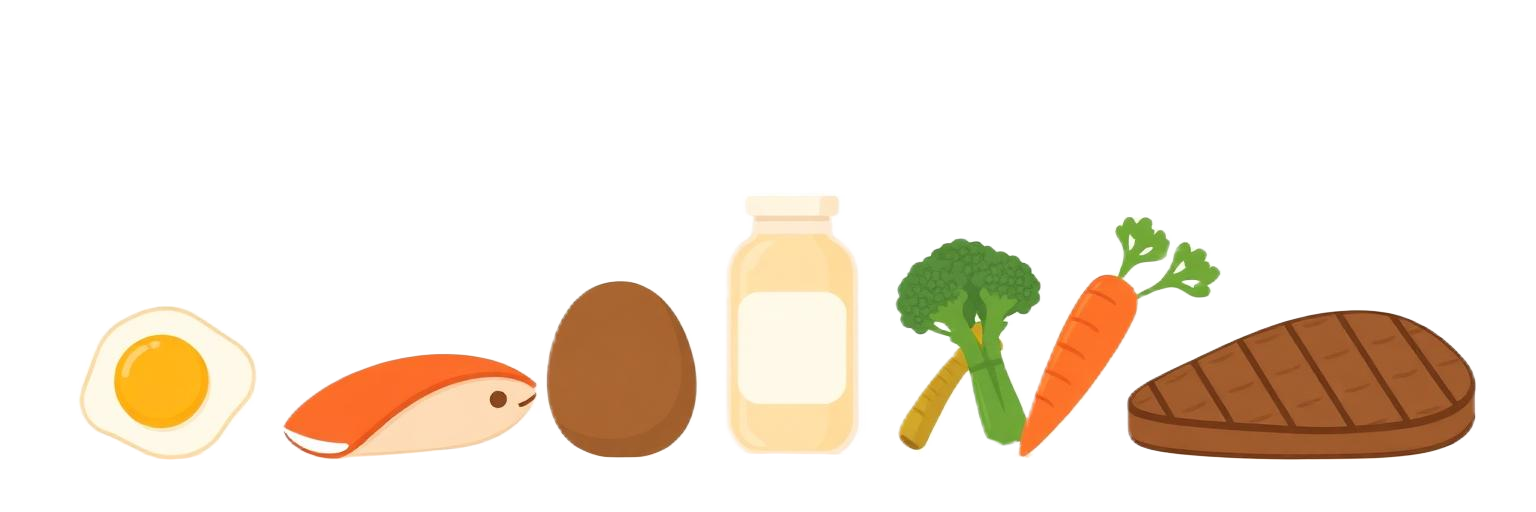
No rigid menu, no calorie counting, no forbidden foods. You choose your own meals. The goal is balanced, mostly whole foods that keep you full and fueled. The easiest way to portion without weighing anything is to use your hand as a guide.
Hydration
Aim for roughly half your body weight (in pounds) in ounces of water per day as a simple starting guide. For many people that lands around 80–100 oz. A practical cue: pale-yellow urine usually means you are well hydrated. Drink a little more on hot days and around workouts. Carry a bottle and sip through the day rather than chugging all at once.
Starting-guide helper
This is a simple starting guide, not a prescription.
Sleep and Recovery

Recovery is where the results actually happen. Protect your sleep and your rest days as seriously as your workouts.
Aim for 7–9 hours a night, with consistent sleep and wake times, even on weekends.
Cut caffeine by early afternoon (around 2 p.m., or roughly 8 hours before bed) so it doesn't disrupt sleep.
Keep alcohol moderate since it meaningfully affects sleep quality and recovery.
Honor your rest/flex days. A gentle walk, stretching, or mobility work counts as active recovery.
ProgressTrack progress & level up
Tracking tips and ways to push harder. Weekly check-ins live in the Reputable Health app.
Track progress & level up
Tracking tips and ways to push harder. Weekly check-ins live in the Reputable Health app.
Level Up
The core program stands on its own. But if you want to push harder, or you are already past the beginner stage, layer in these upgrades. Add one or two at a time rather than everything at once, and keep an eye on recovery: more is only better if you can still sleep well, train hard, and feel good.
Daily Check-In and Tracking
1. Open your wearable app first
Each day, open your wearable app first to sync your data, then complete a quick check-in (under a minute) in the Reputable app. Wear your device, including overnight, so your activity, heart rate, and sleep are captured.
2. Check in inside the Reputable app
Once you have finished your meals and workouts for the day, log in to the Reputable app to confirm you are done for the day, and report any other factors that may be important for us to know about (for example, travel, stress, illness, poor sleep, or anything that feels off).
Optional weekly weigh-in: weigh in once a week, ideally the same day and time, and watch your own trend over the 30 days. You can log it in the Reputable Health app.
ExtrasTake it with you, plus the fine print
Printable plan, other factors, and safety notes.
Take it with you, plus the fine print
Printable plan, other factors, and safety notes.
Download or print your plan
Get the full detailed plan as a PDF for the gym bag, or print this page.
Download or print your plan
Export PDF generates a clean, multi-page document with the weekly schedule, strength routines, cardio, nutrition, hydration, sleep, checklist, and safety notes. Or print this page directly.
Pick a start date above to get a dated 30-day schedule in your PDF.
Other Factors to Keep in Mind
Beyond your workouts, cardio, and steps, a handful of everyday factors shape both how you feel and what your wearable data shows. Lean on the helpful ones, and note the disruptive ones in your daily check-in so your trends make sense.
Intermittent fasting (optional)
Some people do well with a 16:8 eating window, for example noon to 8 p.m. It is optional and not for everyone, so never push through real hunger.
Hydration
Track your water daily and aim for about half your body weight in ounces, roughly 100 oz for many people.
Late caffeine
Avoid caffeine after about 2 p.m. so it does not interfere with your sleep.
Alcohol
Reduce your intake; it meaningfully affects sleep quality, digestion, and recovery.
Stress
High stress often shows up in your HRV, resting heart rate, and sleep.
Illness
If you are under the weather, prioritize rest and ease back in; expect your metrics to reflect it.